 21 Feb 2026
 By Vista Corp
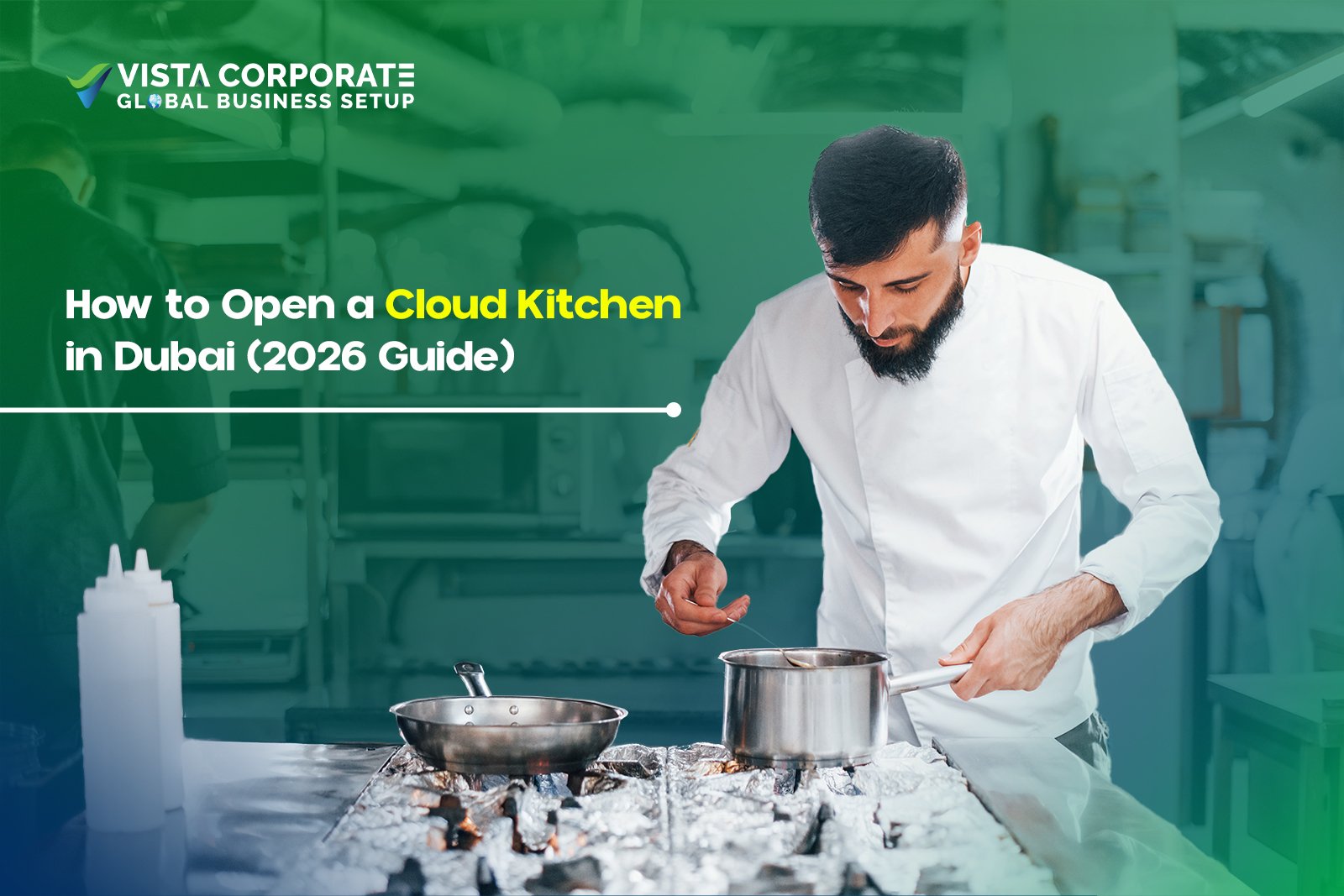
Ever thought about starting your own food brand but got discouraged by the high rents, expensive interiors, and the hassle of running a dine-in restaurant?
That’s exactly why cloud kitchens are gaining so much attention in Dubai.
In 2026, opening a cloud kitchen is one of the simplest ways to step into the F&B space without taking on the full burden of a traditional restaurant. Instead of worrying about seating, décor, or front-of-house staff, you focus purely on what matters: preparing great food and delivering it to customers through online platforms.
With a delivery-first setup, you can test new food concepts, run multiple virtual brands from the same kitchen, and grow at your own pace with lower risk.
This guide walks you through how to open a cloud kitchen in Dubai step by step, from selecting the right jurisdiction and trade license to understanding approvals, HACCP requirements, rent considerations, and setup basics. You’ll also explore different cloud kitchen business models, what makes them work in the UAE market, and how technology can help simplify orders, delivery, and menu planning.
Whether you’re a first-time entrepreneur, a chef with an idea, or an investor exploring the food space, this 2026 guide is built to help you move from concept to a working cloud kitchen with clarity.
What is a Cloud Kitchen?
A cloud kitchen in Dubai, sometimes called a ghost kitchen, dark kitchen, or virtual kitchen, is simply a professional kitchen set up to prepare food only for delivery. There’s no dining area, no tables, and no space for customers to walk in. Instead, everything runs online.
Orders come in through delivery apps like Talabat or Deliveroo, the food is prepared in the kitchen, packed, and sent out for delivery. The entire operation focuses on speed, efficiency, and fulfilling online orders rather than serving dine-in guests.
Example: Biryani Boyz operates as a cloud kitchen in Al Quoz. Customers can’t visit to eat, but they order butter chicken or shawarma rice bowls through Noon Food. One kitchen serves 3 virtual brands (Biryani Boyz, Shawarma Stop, Healthy Plates) using the same ovens and staff, maximising efficiency.
Cloud Kitchen Market Statistics & Insights
- The UAE online food delivery market was valued at approximately USD 2.18 billion in 2022, according to Statista and other industry reports.
- The market is projected to grow at a CAGR of 6.33% through 2026, reaching an estimated volume of around USD 2.8 billion.
- The user base is expected to grow significantly, with projections indicating 5.5 million online food delivery users by 2026.
- Food delivery accounted for 87% of all online purchases in Dubai during Winter 2023, as per the Dubai Gastronomy Industry Report.
- This marked a sharp increase from 73% recorded during the same period in 2022.
- Orders from Talabat’s cloud kitchens grew by 400% in 2022, according to reports from major UAE news outlets and DET data.
- During the same period, Talabat reported having over 19,000 active restaurants on its platform.
- Dubai’s expatriate population makes up approximately 90% of the total population, positioning the city as a strong testing ground for global and niche food concepts.
- Quick commerce (Q-commerce), including groceries and non-food deliveries, is growing faster than pure food delivery, with 60–70% year-on-year growth.
- New regulations in 2026 are emphasising eco-friendly packaging and electric delivery fleets.
These are becoming important considerations for cloud kitchen operators moving forward.
Cloud Kitchen Business Model
Cloud kitchens are flexible by nature, and how you set yours up can shape how your business operates and grows. Different models suit different goals. Some are ideal if you want to stay lean and test ideas. Others work better if you want more control over operations and customer experience.
Here’s an easy explanation of the most common cloud kitchen models.
Hybrid Kitchen – A Mix of Delivery and Takeaway
A hybrid kitchen combines online delivery with customer pickup.
Instead of operating only through delivery apps, this model allows nearby customers to place orders and collect them directly from your kitchen. This works well in locations where takeaway demand exists alongside delivery. It gives your business an additional channel without needing a full dine-in setup.
For example, a food brand may rely mostly on delivery platforms but still offer a simple pickup option for local customers who prefer collecting their meals.
Full-Stack Virtual Kitchen – Complete Control
In this model, the business manages everything internally. From food preparation and packaging to customer interaction and order handling, all operations are handled within the brand’s own system.
This setup offers greater control over quality, service standards, and brand experience. It is often chosen by businesses that want consistency and a strong brand identity.
In simple terms, the kitchen runs as a fully independent online restaurant.
Co-Working Cloud Kitchen – Shared Infrastructure
This model allows multiple food businesses to operate from a shared commercial kitchen. The infrastructure, such as equipment and basic facilities, is already in place. This makes it easier for new brands to launch without building a kitchen from scratch.
It’s especially useful for entrepreneurs who want to test new food concepts or start small before expanding. In this setup, each brand operates independently but shares the same space.
Common Terms Used in Cloud Kitchen Setup and Operations in Dubai
Dubai’s cloud kitchen landscape requires understanding a mix of local regulatory terms and global industry jargon. Here are the key terms you need to know for 2026:
1. Regulatory & Legal Terms
- DET (Department of Economy and Tourism): Formerly known as the DED, this is the main body that issues Mainland Trade Licenses in Dubai.
- Food Establishment License: A mandatory permit issued by the Dubai Municipality Food Safety Department. You cannot handle a single ingredient without this.
- HACCP Certification: Standing for Hazard Analysis and Critical Control Points. This is an international food safety system required in Dubai to ensure your kitchen maintains high hygiene standards.
- Ejari: The official system for registering commercial lease contracts in Dubai. You need a valid Ejari to get your trade license and food permits.
- Civil Defence Approval: A certification ensuring your kitchen meets Dubai’s strict fire safety standards, including proper smoke detectors and fire suppression systems.
2. Business Model Terms
- Ghost/Dark Kitchen: Synonyms for cloud kitchens. These refer to a professional food preparation facility with no dine-in space, focused 100% on delivery.
- Virtual Brands: A “digital-only” restaurant. You might have one physical kitchen (The Ghost Kitchen) but run three different “Virtual Brands” (e.g., a burger brand, a salad brand, and a pasta brand) out of it.
- Shared/Co-Working Kitchen: A facility where you rent a “plug-and-play” kitchen station. The provider handles the major infrastructure (gas, grease traps, electricity), and you provide the chefs and ingredients.
- Satellite Kitchen: A smaller cloud kitchen unit placed in a specific neighbourhood (like JLT or Mirdif) to expand the delivery radius of a main central kitchen.
3. Operational & Tech Terms
- Aggregators: Third-party platforms that list your menu and provide riders, such as Talabat, Deliveroo, Careem Food, and Noon Food.
- POS Integration: Linking your Point of Sale system directly to delivery apps so that orders flow automatically to the kitchen without manual entry.
- KDS (Kitchen Display System): A digital screen in the kitchen that replaces paper tickets. It tracks prep times and ensures the “First-In, First-Out” rule.
- Last-Mile Delivery: The final step of the process of getting the food from your kitchen door to the customer’s doorstep. This is the most critical stage for food temperature and quality.
- Strategic Delivery Radius: The specific geographic area (usually 3–7km) that your kitchen can serve while ensuring the food remains hot and fresh upon arrival.
- Menu Engineering: The data-driven process of analysing which items are most profitable and popular, then redesigning your digital menu to highlight those items.
4. 2026 Innovation Terms
- Digitally Native Consumers: Customers who discover, order, and review food entirely through social media and apps. This is the primary target audience for Dubai cloud kitchens.
- Packaging Optimisation: The science of using materials that prevent “steaming” (soggy fries) and maintain heat, which is a major competitive advantage in the UAE market.
- Q-Commerce (Quick Commerce): The trend of ultra-fast delivery (under 20-30 minutes), which cloud kitchens are increasingly expected to meet.
Key Features of a Cloud Kitchen in Dubai
Cloud kitchens have evolved into smart, efficient setups built for delivery-first dining. Here are the main features that set them apart from traditional restaurants:
1. Built Only for Delivery
Cloud kitchens don’t have dining areas or walk-in customers. The entire space is designed just for preparing, packing, and sending out food quickly.
2. Smart Location Choices
Instead of paying premium rent in high-footfall areas, cloud kitchens operate from delivery-focused zones such as Al Quoz, Business Bay, or DIP, chosen for faster access to residential communities.
3. Multiple Brands, One Kitchen
A single kitchen can run different virtual food brands at the same time. Using the same staff and equipment, it might serve burgers, sushi, or healthy bowls – all under different brand names.
4. Tech-Driven Operations
Orders from platforms such as Talabat, Deliveroo, and Noon Food flow into a single system. This helps kitchens manage orders smoothly and prepare food in sync with delivery pickups.
5. Data-Led Menu Decisions
Because everything is digital, operators can see what’s working in real time, helping them adjust pricing, refine menus, or quickly remove underperforming items.
6. Ready-to-Use Kitchen Spaces
Many setups follow a shared model where fully equipped kitchens are already available. This makes it easier for new brands to launch without building infrastructure from scratch.
7. Lean Teams
Cloud kitchens operate with a focused staff: chefs handle production, and packers manage dispatch, keeping operations efficient and streamlined.
Cloud Kitchen vs Traditional Restaurant
Here is a comprehensive breakdown to help you decide which path best fits your vision.
| Features | Cloud Kitchen | Traditional Restaurant |
| Primary Focus | Focused on speed, delivery efficiency, and data-driven decisions. | Focused on dining experience, ambience, and customer service. |
| Location Strategy | Usually set up in areas like Al Quoz or DIP, where rent is lower but delivery demand is high. | Located in prime areas like Downtown or DIFC to attract walk-in customers. |
| Startup Investment | Generally requires lower investment, making the cloud kitchen cost more manageable for new founders. | Requires significantly higher investment due to interiors, space, and staffing needs. |
| Revenue Streams | Can run multiple virtual brands from one kitchen using a flexible cloud kitchen business model. | Earns from dine-in, takeaway, and delivery services. |
| Customer Interaction | Entirely digital through platforms like Talabat or Deliveroo. | Direct, in-person interaction with customers. |
| Staffing Needs | Smaller teams focused mainly on food preparation and dispatch. Ideal for cloud kitchen startups. | Larger teams, including chefs, servers, and front-of-house staff. |
| Pricing Power | Pricing is often influenced by app competition and discounts. | Customers may pay more for the dining experience. |
| Marketing Approach | Focuses on online visibility and the presence of delivery platforms. | Relies on local reputation, reviews, and word-of-mouth. |
| Break-Even Timeline | Typically faster due to lower operational overheads. | Takes longer due to higher setup and running costs. |
Key Considerations
- Cloud kitchens save on rent and staffing but often share a portion of each order with delivery platforms.
- Traditional restaurants may earn more per customer but carry higher ongoing operational expenses.
- In 2026, many businesses combine both models using a flagship restaurant for brand presence and cloud kitchens for delivery reach.
Five Benefits of Opening a Cloud Kitchen in Dubai
If you are wondering if a cloud kitchen is a smart idea in Dubai, here’s why you should start as soon as possible.
Save BIG on Startup Costs
Imagine skipping the massive rent for JLT glass-front restaurants, fancy lighting, and waiter uniforms. Cloud kitchens let you launch with 60-70% less cash upfront. Your money goes to quality ingredients, not Instagram decor.
Pick the Perfect Delivery Spot (without breaking the bank)
Forget competing for Mall of the Emirates visibility. Set up in Al Quoz or Jebel Ali, 20 minutes to Marina, Downtown, AND Business Bay. Customers don’t care where you cook, just how fast their shawarma arrives.
Run 3 Brands From ONE Kitchen
Morning: Biryani Boyz on Talabat.
Afternoon: Burger Lab on Deliveroo.
Night: FitFeast salads on Noon Food.
Same ovens, same staff, triple the revenue. Delivery apps love this multi-brand magic.
Test & Scale FASTER Than Traditional Spots
Menu bombing? Biryani not selling? Swap to mandi overnight. No printers, menus, or staff retraining. Just update your Talabat profile and watch the data roll in.
Ride Dubai’s Delivery Addiction
87% of online orders are food. 5.5M delivery users by 2026. Talabat cloud kitchen orders up 400% last year. You’re not starting a restaurant, you’re joining a gold rush already in motion.
Ready to cook up some profits? Let’s talk setup.
How to Start a Cloud Kitchen in Dubai: A 12-Step Process
“Delivery-only” doesn’t mean “effortless.” You still need a solid plan, the right approvals, and operations that can handle peak orders, last-mile delivery timing, and food safety requirements.
Step 1: Get Clear on What You’re Building
Before you pick a menu or a location, you need to be clear on what a cloud kitchen is and what kind of setup you’re actually building. A cloud kitchen (also called a ghost kitchen / dark kitchen) is a delivery-only model with no dine-in, no walk-ins, and no “vibe-based” footfall. Your success depends on speed, consistency, packaging, and platform performance.
Ask yourself early:
- Are you building one brand or multiple virtual restaurant brands under one roof?
- Are you starting lean to test demand, or aiming to scale into multiple areas?
- Will you run your own riders or depend fully on aggregator delivery?
This clarity will shape every decision later, from your trade license activity to your kitchen layout and tech stack.
Step 2: Define Your Niche and Delivery-Friendly Menu
A cloud kitchen can’t rely on people “discovering” you while walking past. Your menu needs to win on a phone screen and arrive in good condition. Start with market demand and build from there.
Do this simply:
- Check delivery apps and note what cuisines dominate your target area.
- Identify gaps: underserved cuisine, a dietary niche, or a better version of something people already order.
- Design a menu that travels well: food that stays fresh, doesn’t get soggy fast, and holds temperature.
This step is where most cloud kitchen startups either get it right early or spend months fixing a menu that wasn’t built for delivery.
Step 3: Research Competitors Like a Customer (Not Like a Founder)
Instead of doing “formal research,” act like a buyer. Open Talabat/Deliveroo and study your competitors like you’re ordering dinner.
Pay attention to:
- Pricing and portion value (what looks “worth it”)
- Packaging quality (do people complain about spills, soggy fries, or cold food?)
- Ratings and repeat complaints (these are your opportunities)
- Photos and menu descriptions (how they sell the craving)
This step helps you position your cloud kitchen business model properly.
Step 4: Build a Simple Cloud Kitchen Business Plan
You don’t need a corporate document, but you do need a working plan. A basic cloud kitchen business plan should answer:
- What are you selling and who are you selling to?
- What’s your pricing approach and margins?
- What is the estimated cloud kitchen cost for setup and monthly operations?
- How will you get orders: aggregators only, or also direct (WhatsApp/Instagram)?
Think of it like a roadmap. It helps you decide whether to start with one brand or launch multiple brands from day one, and whether a shared kitchen facility is smarter than building from scratch.
Step 5: Choose Mainland vs Free Zone the Smart Way
This step affects how you operate and how you scale. You’re basically choosing the legal base for your kitchen’s operations.
- Mainland (DET) is usually chosen when the goal is to target the UAE market widely and keep operational flexibility.
- Free Zone can be useful depending on your setup strategy (some operators prefer it for specific structure benefits).
This is also where your Trade License (Mainland vs. Free Zone) decision connects directly with your day-to-day business reality, like where you can operate and how your expansion will be structured.
Please Note: If you’re unsure, this is a step where consulting a business setup expert saves time because fixing the structure later is much harder than choosing correctly now.
Step 6: Pick and Get Your Trade Name Approved
Your trade name is not just branding; it’s the legal identity linked to registrations. You’ll submit the name for approval through the Department of Economy and Tourism (DET) or your selected authority.
Keep it simple:
- Ensure the name is unique and appropriate
- Avoid sensitive words, religious references, or anything that creates approval issues
- Keep 2–3 backup options ready
This step may seem small, but delays often occur here when founders get overly creative with naming.
Also Read: Business Name Rules in Dubai | Complete Guide to Naming Your Company
Step 7: Secure Your Licenses and Municipality Approvals
This is the regulatory core. If you want to run a cloud kitchen restaurant, approvals aren’t optional; they’re what make your kitchen legally operational.
Typically, this stage includes:
- Initial Approval (so you can proceed with space and documentation)
- Trade License with the right activity (restaurant/food service category)
- Food Establishment License (permission to handle and sell food)
- Food safety compliance, including HACCP Certification
- Ejari (Tenancy Contract) for the commercial kitchen space
- Dubai Civil Defence Approval for fire safety compliance
This step is where many first-time founders feel overwhelmed. The easiest way to think about it is: “My kitchen must be legally registered, food-safe, and physically compliant.”
Step 8: Choose a Kitchen Location Based on Delivery Logic
For a cloud kitchen, location isn’t about foot traffic; it’s about delivery time.
A smart location is one that helps you hit a good strategic delivery radius so riders can deliver quickly, and food arrives fresh. Areas like Al Quoz and Ras Al Khor are often used because they help you reach multiple communities without paying premium dine-in rent.
When evaluating spaces, don’t just look at rent. Check:
- ventilation, drainage, hygiene readiness
- waste disposal and cleaning practicality
- loading access for deliveries and supplies
If the kitchen space can’t meet municipal requirements, you’ll waste time and money on redesigns.
Step 9: Build Your Own Kitchen or Use a Shared Facility
This is a major decision for speed and simplicity.
You can either:
- build your own kitchen from scratch, or
- use a shared kitchen facility/co-working kitchen that is already approved and equipped.
Many new operators choose shared facilities because they already handle much of the hard infrastructure. It’s often faster for first launches and testing concepts.
If your goal is to validate demand first, shared kitchens reduce the risk and speed up launch.
Step 10: Set Up Equipment & Your Tech Stack
Your kitchen setup must handle volume and accuracy. In delivery, mistakes include incorrect items, missing sauces, late prep times, and poor packing.
You’ll need:
- commercial cooking and refrigeration equipment
- a strong packaging station (this matters more than people think)
And you’ll need tech that supports:
- POS Integration (Point of Sale) with delivery platforms
- a Kitchen Display System (KDS) so orders don’t get missed
- centralised order management, so multiple platforms don’t create chaos
This is what makes a cloud kitchen feel “high-tech” in 2026. It’s not about fancy tools; it’s about reducing human error and keeping prep-to-pack smooth.
Step 11: Onboard With Aggregators to Create a Simple Direct Channel
Most cloud kitchens rely heavily on food aggregators like Talabat, Deliveroo, Careem, and Noon Food because demand already exists there.
When onboarding:
- keep your menu clear and easy to browse
- invest in good photos (people buy with their eyes)
- set realistic prep times so riders arrive when food is ready (critical for last-mile delivery)
Also consider a simple direct ordering channel:
- WhatsApp ordering
- Instagram DM ordering
- a basic website order page
This helps you build repeat customers outside the platform ecosystem over time.
Step 12: Soft Launch, Learn Fast, Then Scale
A soft launch is your controlled test phase. Instead of going full marketing on day one, you test operations with a limited menu and tighter delivery hours.
During soft launch, check:
- how long orders take from acceptance to dispatch
- packaging performance (spills, temperature, presentation)
- delivery timing consistency
- customer feedback and repeat complaints
Once stable, go live fully and start using data-driven menu engineering:
- track best sellers and peak time patterns
- refine menu weekly
- remove weak items fast (delivery brands can pivot quicker than dine-in)
When you’re ready to scale, cloud kitchens have a big advantage: you can launch additional virtual restaurant brands using the same staff, equipment, and ingredients. One of the strongest benefits of the cloud kitchen model in Dubai.
Final Checklist Before Launch
- Trade name approved and license pathway clear
- Trade License + Food Establishment License in progress/issued
- HACCP compliance planned and staff trained
- Ejari completed + Dubai Civil Defence Approval ready
- Kitchen equipment installed + packaging workflow tested
- POS + KDS set up for centralised order flow
- Aggregator listings approved and menu photos uploaded
- Soft launch completed with feedback improvements
Legal & Licensing Requirements for a Cloud Kitchen in Dubai
To run a cloud kitchen in Dubai smoothly, certain approvals are required to ensure your business meets legal and food safety standards. Here are the key permissions you’ll need:
Trade License
Issued by the Department of Economy and Tourism (for mainland setups) or a relevant Free Zone authority. This gives your business the legal right to operate under a food-related activity.
Food License
Provided by the Dubai Municipality’s Food Safety Department. This allows you to prepare, handle, and sell food.
Food Safety Compliance
Your kitchen must meet required hygiene and safety standards, including recognised food safety practices. Staff may also need relevant training to ensure compliance.
Kitchen Tenancy Registration (Ejari)
Your kitchen must operate from a registered commercial space that meets municipality guidelines for health and safety.
Company Registration
Your business must be formally established under an approved legal structure and trade name.
Civil Defence Clearance
Approval is required to confirm that your kitchen meets fire safety and ventilation requirements.
Documents Required to Start a Cloud Kitchen in Dubai
Before applying for your cloud kitchen license, it’s important to have all the necessary documents ready. Proper documentation helps speed up approvals from authorities like the Department of Economy & Tourism (DET), Dubai Municipality, and Civil Defence.
Below is a categorised checklist of the key documents required.
1. Business Setup Documents
These are required for company registration and trade license issuance.
- Passport copies of all shareholders/owners
- UAE visa copies (if applicable)
- No Objection Certificate (NOC) from sponsor (if employed or under spouse sponsorship)
- Local Service Agent Agreement (for mainland sole establishments or civil companies owned by expatriates)
- Memorandum of Association (MOA) for LLC structures
- Approved Trade Name Certificate from DET
2. Premises & Tenancy Documents
These confirm that your kitchen space meets legal requirements.
- Ejari-registered tenancy contract
- Title deed copy from the landlord
- Kitchen layout plan showing preparation, storage, cooking, cleaning, and waste areas
- Location map of the premises
3. Health, Safety & Operational Documents
These are required for Dubai Municipality approvals.
- HACCP-based Food Safety Management Plan
- Food handler training certificates for staff
- Medical fitness certificates for kitchen employees
- Equipment list with specifications
- Waste disposal contract with an approved provider
- Pest control contract with a licensed company
4. Additional Documents (If Required)
Depending on the setup, authorities may request:
- Civil Defence approval after kitchen fit-out
- Packaging and branding samples for labelling compliance
Pro Tip: Keep both scanned and original copies ready, as requirements may vary based on your business structure.
What Affects the Investment and Cost to Start a Cloud Kitchen in Dubai?
Starting a cloud kitchen in Dubai involves several moving parts, and the overall investment depends on the choices you make at each stage of setup. Instead of a fixed number, think of it as a combination of key areas where your spending will come in.
Here’s a simple breakdown of the main factors that influence how much you’ll need to invest.
1. Business Licensing & Government Approvals
To operate legally, you’ll need to complete certain registrations and obtain approvals from authorities.
Investment in this stage typically depends on:
- Trade name reservation and initial approvals
- Trade license issuance from the relevant authority
- Food establishment permits from Dubai Municipality
- Civil Defence approvals for safety compliance
- Attestation and documentation requirements
The exact amount varies based on your chosen business structure and setup pathway.
2. Kitchen Location & Physical Setup
This is usually one of the biggest deciding factors in your overall investment.
Your spending will depend on:
- The type of kitchen space you choose
- Whether it’s located in an industrial zone or a central area
- Security deposits required for tenancy
- Ejari registration for your lease
- Any interior modifications needed to meet municipality and safety standards
Fit-out requirements such as ventilation systems, plumbing, electrical work, and layout adjustments can also impact this significantly.
3. Equipment & Initial Supplies
Every cloud kitchen needs the right tools to operate efficiently.
Investment here depends on:
- The scale of your kitchen operations
- The type of cuisine you plan to offer
- Commercial cooking equipment and refrigeration needs
- Food preparation and storage setups
- Initial packaging materials
- First round of ingredient stock
A lean setup may require less, while multi-brand kitchens may need a wider range of equipment.
4. Technology & Software
Modern cloud kitchens rely heavily on technology to manage orders and operations smoothly. Your investment will vary depending on:
- POS systems and order management tools
- Kitchen display systems for workflow
- Inventory tracking and delivery management software
- Integration with food delivery platforms
The level of automation you choose plays a big role here.
5. Operational & Pre-Launch Preparation
Before your kitchen starts accepting orders, there are a few essentials to prepare for. These include:
- Staff onboarding and visa processing (if required)
- Food safety training and medical clearances
- Business insurance coverage
- Initial marketing and brand launch activities
- Utility connections such as electricity and gas
The scale of your launch strategy and team size will influence this part of your setup.
10 Real Cloud Kitchen Marketing Hacks in Dubai (2026)
Marketing is the heart and brain of your business. How will people order if they don’t know you exist, and why will people offer if you don’t stand out among the crowd? Therefore, how you market your cloud kitchen, your dishes, and your USPs can be a game-changer.
1. Win the Decision Moment
Customers don’t spend as much time comparing options as they used to. Most orders are decided within seconds. This means your dish name, image, and positioning need to instantly communicate what the customer is getting and why it’s worth ordering.
2. Build for Discoverability
Even the best food won’t sell if people can’t find it. Today, marketing starts with how easily your menu appears on delivery platforms. A well-thought-out name and description can help your dishes show up when customers are browsing.
3. Design for Repeat Orders
One-time orders don’t build a sustainable kitchen. The goal is to make customers come back again. Portion size, taste consistency, and ease of ordering all play a role in turning a first-time buyer into a regular.
4. Own a Consumption Moment
Instead of trying to appeal to everyone, focus on a specific need. Some kitchens win by being the go-to for quick work lunches, while others dominate late-night comfort meals.
5. Learn from Order Behaviour
Delivery platforms offer valuable insights into what customers like and when they order. Understanding peak times, popular dishes, and feedback can help you shape your marketing and menu decisions.
6. Make Delivery an Experience
Customers don’t see your kitchen, but they do see your packaging. A thoughtful presentation can leave a strong impression and make the order feel more memorable.
7. Focus on Local Loyalty
Building strong connections within nearby communities often works better than chasing large audiences. Offices, residential areas, and fitness groups around you can become consistent sources of repeat orders.
8. Use Value Perception
Customers don’t always compare prices; they compare what they feel they are getting. Simple combinations or meal bundles can make an order seem more worthwhile.
9. Introduce Small Newness
You don’t need to constantly change your menu. Even occasional limited-time additions can keep customers curious and interested.
10. Stand for Something
Customers are more likely to remember a brand that has a clear identity. Whether it’s indulgent treats, healthy meals, or everyday comfort food, clarity helps build recognition.
Initial Stock to Plan for When Setting Up a Cloud Kitchen in Dubai
When starting a cloud kitchen, your initial stock should be lean to avoid waste while ensuring you can handle the first week of orders. Since you don’t have walk-in customers, your “inventory” is purely functional.
1. Raw Ingredients & Dry Goods
- Core Proteins: Frozen or fresh meats, poultry, seafood, or plant-based alternatives (order based on 3-day projections).
- Pantry Staples: Cooking oils (canola, olive, frying oil), bulk grains (rice, pasta, flour), and sugar/salt.
- Spices & Sauces: Base sauces (tomato, mayo, soy), vinegar, and your signature dry spice blends.
- Fresh Produce: Daily essentials like onions, garlic, ginger, and garnishes (herbs/leafy greens).
2. Specialised Packaging (Critical for Cloud Kitchens)
- Primary Containers: Leak-proof bowls, burger boxes, or pizza cartons (branded if possible).
- Insulation Materials: Foil wraps or thermal liners to maintain temperature during transit.
- Outer Bags: Sturdy paper or eco-friendly plastic bags with secure handles.
- Condiment Packets: Small sachets of ketchup, chilli flakes, salt, and pepper.
- Disposable Cutlery: Individually wrapped sets (napkins, spoons, forks, or chopsticks).
3. Cleaning & Hygiene Supplies
- Sanitisers: Food-grade surface sprays and high-quality hand wash.
- Safety Wear: Disposable gloves, hairnets, and aprons for kitchen staff.
- Cleaning Tools: Industrial sponges, microfibre cloths, and heavy-duty trash liners.
- HACCP Essentials: Temperature probe wipes and colour-coded labels for “First-In, First-Out” (FIFO) tracking.
4. Smallware Essentials
- Prep Tools: Extra sets of mixing bowls, whisks, and spatulas to avoid constant washing during peak hours.
- Storage: Airtight “Cambro” containers of various sizes for prepped ingredients.
Common Cloud Kitchen Mistakes (And How to Avoid Them)
Starting a cloud kitchen is exciting, but a few early missteps can slow you down. Here are some common pitfalls and how to handle them smartly.
1. Ignoring Licensing & Compliance
The Mistake: Treating approvals as a formality.
The Fix: Prioritise all required permits before launch. Ensure your setup meets food safety and operational standards from day one.
2. Choosing Location Based Only on Rent
The Mistake: Picking a cheaper space without considering delivery reach.
The Fix: Select a location that enables fast delivery to your key customer zones.
3. Overlooking the Delivery Experience
The Mistake: Focusing only on taste inside the kitchen.
The Fix: Invest in packaging and test deliveries to ensure food arrives fresh and presentable.
4. Trying to Manage Everything Yourself
The Mistake: Handling delivery, marketing, and operations all in-house.
The Fix: Use aggregator platforms and expert support so your team can focus on food quality.
5. Starting with a Complex Menu
The Mistake: Offering too many dishes at launch.
The Fix: Begin with a focused menu that travels well and is easy to execute consistently.
How to Use AI in Your Cloud Kitchen in Dubai
AI is making cloud kitchens easier to run by helping you save time, reduce waste, and make better decisions. Here’s how you can use it in simple ways:
1. AI for Planning Stock & Busy Hours
AI can help you understand when orders are likely to increase. This helps you:
- Prepare the right amount of ingredients
- Avoid over-ordering or food waste
- Highlight popular dishes during peak times
2. AI for Managing Orders
If you receive orders from different delivery apps, AI can bring everything into one place. It helps you:
- Handle orders faster
- Decide what to prepare first
- Improve delivery timing
3. AI in Kitchen Operations
Some smart tools can help reduce manual work. For example:
- Smart appliances can control cooking settings
- Sensors can monitor fridge temperatures
- Alerts can notify you if something goes wrong
4. AI for Customer Experience
AI can help you understand your customers better. You can use it to:
- Offer personalised deals
- Respond to customer questions through chatbots
- Analyse reviews to improve service
5. AI for Menu Decisions
AI can show you what’s working and what’s not. This helps you:
- Focus on popular items
- Improve your menu over time
- Create better combo offers
Why AI is Useful for Cloud Kitchens
Using AI can help you:
- Reduce food waste
- Speed up operations
- Improve customer satisfaction
- Run your kitchen more smoothly
With the right tools, AI can make your cloud kitchen smarter and easier to manage in a competitive market like Dubai.
Partnering with Third-Party Delivery Services
Although popular platforms like Talabat, Deliveroo, Zomato, and Careem offer built-in delivery solutions, some cloud kitchens choose to collaborate with independent logistics providers to manage their direct orders. This approach can help reduce platform commissions and provide greater control over the delivery process.
If you’re looking to work with a third-party delivery partner in Dubai, here are a few steps to consider:
- Explore Local Delivery Providers: Companies such as Shipa Delivery, Quiqup, Jeebly, and iMile focus on handling food deliveries efficiently.
- Evaluate Service Coverage: Review their delivery areas, timelines, and operational capabilities to ensure they match your target market.
- Check Fleet Support Options: Some providers offer rider tracking and even branded delivery teams to enhance the customer experience.
At the same time, listing your cloud kitchen on major delivery platforms is equally important. Each platform follows its own onboarding process:
- Talabat: Registration requires your trade license, food license, and menu details. Once approved, they typically provide tools to help manage incoming orders.
- Deliveroo: Businesses can apply through their partner portal. The platform may review your setup and verify your kitchen before activation.
- Zomato: Through their business registration process, their team assists with menu setup and listing details.
- Careem: Signing up as a partner allows access to their delivery network and visibility features.
After your application is approved, these platforms usually provide access to a dashboard where you can manage orders, update menus, and track performance. The onboarding timeline varies depending on documentation and verification requirements.
Tips for Building a Successful Cloud Kitchen in Dubai
Running a cloud kitchen successfully is not just about cooking great food; it’s about planning smartly, operating efficiently, and building a strong digital presence. Here’s how you can set your cloud kitchen up for long-term success.
Start with Strong Market Understanding
Before launching, take time to understand your market and define your approach.
Focus on:
- Your cuisine and meal offerings
- Your target audience and ordering habits
- Your pricing approach in a competitive market
- How customers will place orders. Through delivery apps, your own platform, or both
A clear plan helps you stay prepared and avoid guesswork later.
Build a Brand That Stands Out
Since customers never visit your kitchen physically, your brand becomes your identity.
You can stand out by:
- Creating a clear story behind your food
- Keeping your messaging consistent across platforms
- Offering something unique, whether it’s a signature dish or a niche cuisine
- Using attractive and memorable packaging
Start by building a loyal local audience before expanding further.
Choose the Right Location
Location in a cloud kitchen is about delivery efficiency, not footfall.
Keep these factors in mind:
- Proximity to your main customer zones
- Easy access for delivery riders
- Adequate kitchen space and storage
- A setup that supports smooth order handling
Planning with future expansion in mind can also help as your business grows.
Protect Food Quality During Delivery
Food needs to travel well. You can maintain quality by:
- Selecting menu items that hold their texture and temperature
- Using reliable packaging
- Coordinating preparation and pickup timing
- Collecting feedback to improve the delivery experience
Use Technology to Your Advantage
Technology makes daily operations easier and scalable.
It can help you:
- Manage orders from multiple platforms in one place
- Track inventory and adjust menus based on demand
- Analyse customer behaviour and tailor promotions
- Monitor performance through simple dashboards
Manage Inventory Efficiently
Smart inventory practices reduce waste and ensure smooth operations. Consider:
- Tracking stock regularly
- Planning purchases based on peak demand
- Maintaining backup suppliers
- Ordering in smaller, frequent batches
Optimise Your Presence on Delivery Apps
Delivery platforms are often the first place customers discover you.
Improve visibility by:
- Using appealing photos and clear descriptions
- Maintaining strong ratings
- Responding professionally to feedback
- Ensuring timely order fulfilment
Strengthen Your Digital Marketing
A strong online presence helps attract and retain customers.
You can:
- Stay active on visual platforms like Instagram or TikTok
- Share behind-the-scenes content
- Run targeted promotions for nearby customers
- Create seasonal or cultural offers
Engage with the Community
Partnerships can bring consistent demand.
You may collaborate with:
- Gyms for meal plans
- Offices or co-working spaces
- Residential communities
Participating in local events or pop-ups can also increase brand awareness.
Encourage Repeat Orders
Customer loyalty drives stability. Simple loyalty programs or repeat-order rewards can motivate customers to choose your kitchen again.
FAQs: Everything You Need to Know About Cloud Kitchens in Dubai
What is a cloud kitchen? What are its models?
A cloud kitchen is a professional kitchen built only for delivery, with no dining area. Common models include Single-brand (one kitchen, one menu), Multi-brand (one kitchen, several different cuisines), and Shared Kitchens (renting a station in a large, pre-equipped facility).
Are cloud kitchens and dark kitchens the same?
Yes, they are exactly the same thing. Terms like “dark kitchen,” “ghost kitchen,” and “virtual kitchen” all refer to the same delivery-only business model where customers order online and never visit the physical location.
How much does it cost to set up a cloud kitchen?
On average, setting up your own small cloud kitchen costs between AED 75,000 and AED 150,000. This covers your license, basic equipment, initial rent, and staff visas. If you use a shared kitchen, your upfront cost can be much lower.
How big is the cloud kitchen market?
The UAE cloud kitchen market is massive and expected to reach AED 7 billion by late 2026. With over 90% of Dubai’s population being expats who love ordering in, it is one of the fastest-growing food sectors in the region.
What is the rent of a cloud kitchen in Dubai?
Rent varies by location, but you can expect to pay AED 4,000 to AED 8,000 per month for a space in industrial areas like Al Quoz or Ras Al Khor. In premium “shared” facilities like Kitopi or KitchenPark, you might pay a monthly fee plus a percentage of your sales.
Best location for a cloud kitchen in Dubai.
The best locations are Al Quoz, Business Bay, Hessa Street, and Silicon Oasis. These areas are central, allowing your riders to reach the most populated residential communities (like Marina, JLT, or Nad Al Sheba) within the critical 15-minute delivery window.
Can I run a cloud kitchen from my home?
No, it is illegal to run a commercial cloud kitchen from a residential home in Dubai. You must operate from a licensed commercial space that meets Dubai Municipality’s strict health, safety, and hygiene standards.
How long does it take to start a cloud kitchen?
If you use a shared kitchen facility, you can be up and running in 2 to 4 weeks. If you are building your own kitchen from scratch, it usually takes 2 to 3 months because of the time needed for fit-outs and municipality approvals.
Why should I choose Vista for my cloud kitchen setup in Dubai?
Vista simplifies the entire process by handling your DET license, Municipality approvals, and Ejari in one place. We help you avoid costly mistakes in kitchen layout and jurisdiction choice, so you can focus on your menu while we handle the red tape.
How many staff would I need to start a cloud kitchen?
You can start very lean with just 2 to 3 people: one head chef and one or two kitchen assistants to handle prep and packing. Since there is no “front-of-house” service, you don’t need waiters, hosts, or cleaning crews for a dining area.
Mainland or Free Zone? Which is the ideal jurisdiction for my cloud kitchen?
Mainland (DET) is generally better because it allows you to deliver anywhere in Dubai without restrictions. Free Zones can be cheaper for the license but may limit your ability to deliver directly to customers living in mainland residential areas.
What license do I need to start a cloud kitchen in Dubai?
You need a Professional or Commercial Trade License with the activity “Food Preparation and Delivery.” Additionally, you must obtain a Food Establishment License from the Dubai Municipality and HACCP certification for food safety.
Can I operate multiple brands under one cloud kitchen?
Yes, this is the biggest advantage of the model. You can use the same equipment and staff to run a burger brand, a pizza brand, and a salad brand all at once, as long as your trade license allows for those specific food activities.
Is a cloud kitchen a profitable business in Dubai?
Yes, it can be highly profitable because your overhead (rent and staff) is 60-70% lower than that of a traditional restaurant. Most successful cloud kitchens in Dubai aim to break even within 6 to 12 months, compared to 3+ years for a dine-in spot.
How much investment is needed to start a cloud kitchen?
A safe total investment for the first year (including setup and 3 months of working capital) is around AED 120,000 to AED 180,000. This ensures you have enough cash for marketing and aggregator commissions while your brand gains popularity.
Why Choose Vista to Open Your Cloud Kitchen in Dubai
Most people think starting a cloud kitchen is just about getting a license. But what usually slows things down isn’t paperwork; it’s the small things nobody thinks about when understanding how to open a cloud kitchen in Dubai.
Like choosing a kitchen that doesn’t get approved.
Or realising too late that your setup doesn’t match what delivery platforms expect.
Or fixing compliance issues after you’ve already invested time and effort.
That’s where having the right guidance early makes a difference.
At Vista Corporate Global Business Setup, we help you look at your cloud kitchen the way it will actually operate, not just how it looks on paper.
We support you in:
• setting up correctly from the start
• aligning your approvals with real operations
• avoiding common setup mistakes
So your launch doesn’t get stuck in the middle. You focus on building your food brand. We help you start it the right way.
Call: +971 58 915 1234
Email: info@TheVistaCorp.com
Instagram: https://www.instagram.com/vistacorporategroup/
Book a Free 30-Minute Consultation
Disclaimer: The information provided in this blog is for general guidance and informational purposes only. Regulatory requirements, approvals, timelines, and operational considerations for cloud kitchens in Dubai may change based on updates from relevant authorities such as DET, Dubai Municipality, and Civil Defence. Readers are advised to seek professional consultation before making business decisions. Vista does not assume liability for actions taken based solely on this content.
Search
Recent Post
 24 Mar 2026
 18 Mar 2026