 11 Jun 2026
 By Vista Corp
Dubai does not just move fast. Dubai moves the world.
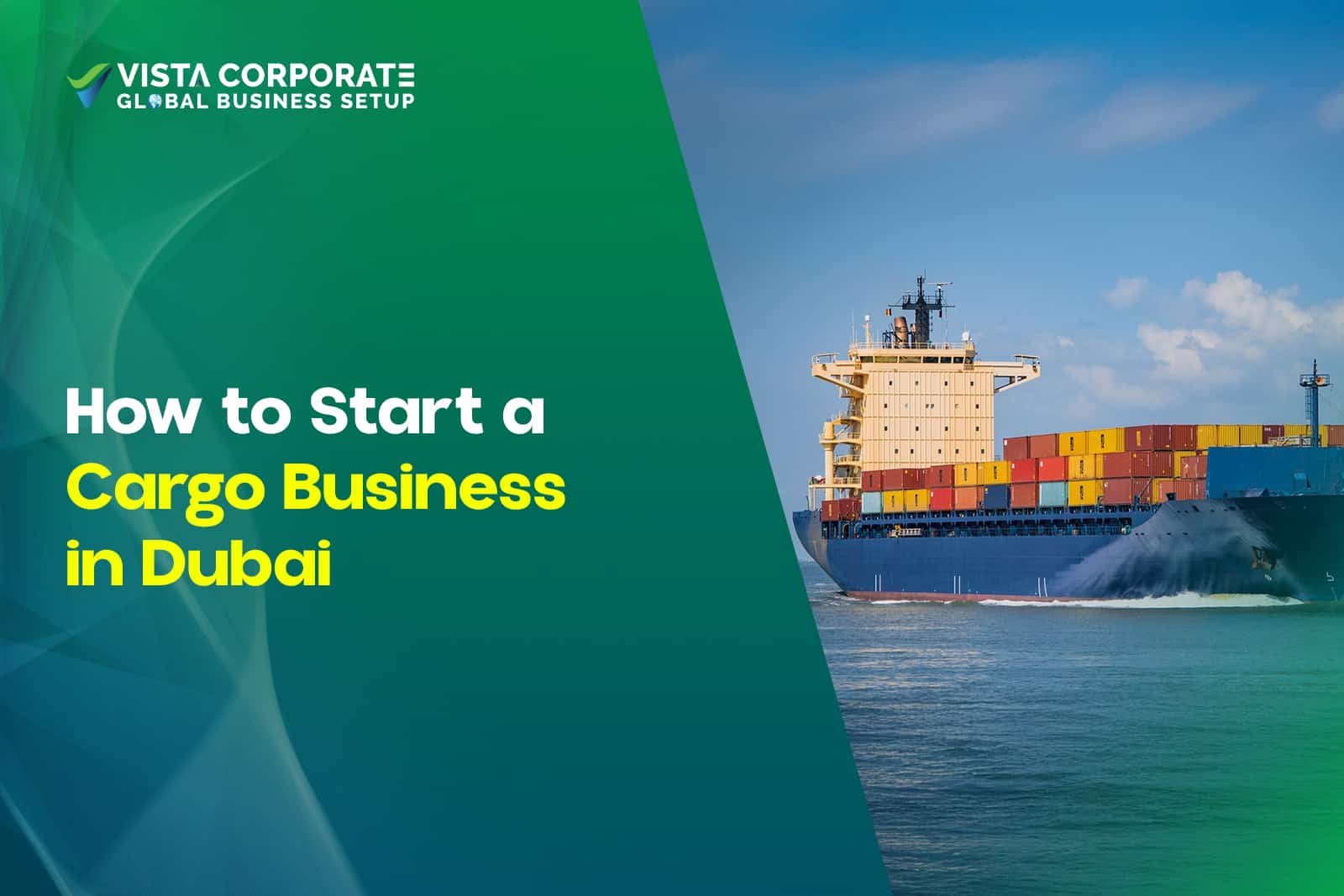
Every day, goods arrive, leave, shift, clear, store, re-export, and travel through one of the most connected trade ecosystems on the planet. From Jebel Ali Port to Dubai International Airport, from free zones to mainland warehouses, from e-commerce deliveries to international freight, Dubai has built a business environment where cargo is not just an industry. It is the city’s bloodstream.
So, if you are planning to start a cargo business in Dubai, you are looking at a sector with serious potential. But here is the catch: cargo is not a business you start casually. It needs the right license, the right activity, the right approvals, the right operational model, and the right compliance structure.
This guide explains how to start a cargo company in Dubai, what business models you can explore, what approvals may be required, and how Vista Global Business Setup can help you launch with clarity.
Why Dubai Is a Strong Market for Cargo Businesses
Dubai’s biggest advantage is geography. The city sits between Asia, Europe, Africa, and the wider Middle East, making it a natural base for regional and international trade. But geography alone is not the reason Dubai became a logistics giant. The real strength comes from its infrastructure.
Dubai has major sea, air, road, and free zone connectivity, allowing cargo businesses to serve importers, exporters, e-commerce brands, manufacturers, wholesalers, retailers, and international traders. Jebel Ali Port, Dubai International Airport, Al Maktoum International Airport, JAFZA, Dubai South, and other logistics hubs make the emirate one of the region’s most important cargo gateways.
The UAE logistics market is also expected to keep growing. Market research estimates the UAE logistics market at around USD 57.6 billion in 2025, with projections reaching USD 96.3 billion by 2034. This growth is supported by e-commerce, manufacturing, trade, warehousing, and regional distribution demand.
That means the opportunity is not only for large logistics companies. Small and mid-sized cargo businesses can also find space if they choose the right niche.
What Is a Cargo Business in Dubai?
A cargo business helps individuals and companies move goods from one place to another. Depending on the model, this may include freight forwarding, customs coordination, warehousing, packing, shipping, delivery, import-export support, air cargo, sea cargo, land transport, or third-party logistics.
A cargo business may serve:
- E-commerce sellers
- Trading companies
- Importers and exporters
- Manufacturers
- Retailers
- Construction suppliers
- Food and FMCG companies
- Relocation clients
- Industrial businesses
- International buyers and sellers
Some companies focus on local delivery. Some handle international freight. Some manage customs clearance. Some provide warehousing and distribution. Others act as a full logistics partner.
The best part is that you do not have to become the biggest player on day one. You can start with a focused service and expand as your client base grows.
Popular Cargo Business Models in Dubai
Before applying for a license, you need to decide what type of cargo business you want to run. This matters because your business activity, approvals, office or warehouse requirements, vehicle needs, and banking profile may depend on the model.
1. Freight Forwarding Business
A freight forwarding company arranges the movement of goods on behalf of clients. It may coordinate with shipping lines, airlines, customs brokers, transport providers, and warehouses.
Freight forwarders usually do not own ships or planes. They manage the process, documentation, routes, rates, and coordination.
This model is suitable if you want to work with importers, exporters, traders, manufacturers, and international clients.
2. Air Cargo Services
Air cargo focuses on goods moved by air. This is often used for urgent, high-value, lightweight, temperature-sensitive, or time-critical shipments.
Dubai International Airport is one of the world’s busiest international aviation hubs, making air cargo an important part of the city’s trade system.
This model may require specific approvals, partnerships, and operational arrangements depending on your service scope.
3. Sea Cargo Services
Sea cargo is ideal for large-volume international shipments, container cargo, commercial goods, machinery, raw materials, and bulk items.
Dubai’s Jebel Ali Port is one of the region’s major shipping hubs, making sea cargo a strong business opportunity for freight and forwarding companies.
If your clients deal with import-export, wholesale trade, or global sourcing, sea cargo services can be a valuable offering.
4. Land Transport and GCC Cargo
Land cargo focuses on moving goods by road within the UAE or across GCC countries. This may include truck transport, delivery vans, commercial fleet operations, and cross-border movement.
If your business uses commercial vehicles, you may need transport-related permits and approvals depending on the vehicle type and activity.
5. Warehousing and Distribution
Warehousing businesses store goods for clients and may also provide inventory management, packing, labelling, dispatch, and distribution.
This model is especially useful for e-commerce brands, retailers, FMCG businesses, and importers.
However, warehousing may require suitable premises, authority approvals, storage planning, and possibly additional permissions depending on the nature of goods.
6. E-Commerce Logistics
E-commerce logistics is growing quickly in the UAE. Online sellers need storage, fulfilment, last-mile delivery, returns management, and fast dispatch support.
This can be a smart niche for new cargo businesses because many online sellers do not want to handle logistics themselves.
7. Customs Clearance Support
Customs clearance is a specialised area that involves documentation, declarations, duties, import/export rules, and authority procedures.
Dubai Customs states that clients need to be registered with Dubai Customs as an importer/exporter, free zone company, or customs broker for relevant customs-related processes.
This area requires strong technical knowledge and proper compliance handling.
Mainland or Free Zone: Which Is Better for a Cargo Business in Dubai?
This is one of the most important decisions.
A mainland license may be suitable if you want to serve clients across the UAE market, open a physical office or warehouse in Dubai mainland, work directly with local businesses, or operate with broader local market access.
A free zone license may be suitable if you want to focus on international trade, re-export, logistics hubs, warehousing, or operations near ports, airports, and trade corridors. Free zones such as JAFZA and Dubai South are popular for logistics-related businesses due to their infrastructure and connectivity.
There is no one-size-fits-all answer. The right jurisdiction depends on your activity, client base, cargo type, office or warehouse needs, customs requirements, visa needs, banking expectations, and expansion plans.
This is where business setup guidance matters. Choosing the wrong jurisdiction can create operational limitations later.
Step-by-Step Guide to Start a Cargo Business in Dubai
Step 1: Choose Your Cargo Business Activity
Your first step is to decide the exact nature of your cargo services. This may include freight forwarding, cargo packaging, logistics services, transport, warehousing, courier activity, import-export support, or distribution.
This step is critical because your license activity must match your actual business. If you choose a vague or incorrect activity, you may face issues with approvals, banking, contracts, customs, and future operations.
For example, a company offering freight forwarding may need a different activity from a company providing warehouse storage or road transport services.
Vista Global Business Setup helps entrepreneurs select the right activity based on the business model, future plans, and operational requirements.
Step 2: Choose Mainland or Free Zone Setup
Once the activity is clear, you need to choose the jurisdiction.
For a cargo business in Dubai, your location decision should be practical, not emotional. Ask:
- Will you serve UAE mainland clients directly?
- Do you need warehouse space?
- Will you operate near ports or airports?
- Will you focus on import-export or re-export?
- Do you need vehicles?
- Will you hire staff?
- Do you need customs registration?
- What kind of banking profile will your company have?
A free zone may offer strong logistics infrastructure, while the mainland may offer wider local market access. Vista helps compare both options so you can choose the structure that actually supports your business.
Step 3: Reserve Your Trade Name
Your cargo company needs a trade name that follows UAE naming rules. The name should not violate public morals, include restricted words without approval, copy an existing business name, or misrepresent the activity.
A strong trade name should be simple, professional, and relevant to logistics, cargo, freight, shipping, or supply chain services.
This matters because in the cargo industry, credibility begins with how your company presents itself.
Step 4: Apply for Initial Approval
Initial approval confirms that the authority has no objection to you starting the business activity, subject to completing the remaining requirements.
Depending on your jurisdiction and activity, additional approvals may be needed. Cargo, logistics, transport, and customs-related activities can involve more review than simple consultancy businesses.
Vista Corporate helps clients understand which approvals may apply before the application reaches a delay point.
Step 5: Prepare Legal Documents
Your company formation documents may include passport copies, visa copies where applicable, shareholder details, business plan or company profile, office lease or flexi-desk documents, Memorandum of Association, incorporation forms, and authority-specific documents.
If your business has multiple shareholders, proper structuring is important from day one. Roles, ownership percentages, manager details, and signing authority should be clear.
Banks and authorities may also review ownership and management details, especially for cargo and logistics activities.
Step 6: Secure Office, Warehouse, or Facility Requirement
Some cargo businesses may only need an office, while others may require warehouse space, storage facilities, or logistics premises.
If you plan to provide warehousing, fulfilment, or storage-related cargo services, the physical facility becomes a major part of your setup. The location should support transport access, loading/unloading, inventory movement, and client requirements.
For companies near ports, airports, or logistics corridors, the right facility can become a competitive advantage.
Step 7: Obtain the Trade License
After documents, approvals, and premises requirements are completed, the authority issues the trade license.
This license allows the company to legally operate under the approved business activity. However, for cargo businesses, the trade license may not be the final step. Depending on your services, you may also need customs registration, transport permits, or additional operational approvals.
For example, logistics companies may require a trade license from the Department of Economy and Tourism for mainland or from a free zone authority, and commercial fleet operations may require transport-related permits depending on the activity.
Step 8: Register with Dubai Customs, If Required
If your cargo business deals with import, export, re-export, or customs-related services, Dubai Customs registration may be required.
Dubai Trade also lists documents for freight forwarder-related account activation, including a license copy, a company request letter, and a passport copy of the authorised person.
Customs processes are important because cargo businesses often deal with declarations, duties, clearance documents, HS codes, shipping documents, certificates of origin, and import/export regulations.
Poor customs handling can lead to delays, penalties, shipment holds, or client dissatisfaction.
Step 9: Open a Business Bank Account
A business bank account in Dubai is essential for receiving payments, paying vendors, managing client funds, handling international transfers, and building credibility.
Cargo businesses should prepare a strong bank file because banks may ask for details such as:
- Company activity
- Business model
- Source of funds
- Expected transaction countries
- Expected monthly turnover
- Supplier/customer details
- Shareholder background
- Contracts or invoices, if available
- Website or company profile
Vista helps clients prepare banking documents and present a clear business profile for smoother account opening.
Step 10: Build Your Operations
Once your company is licensed and bank-ready, you need to build the operational side.
This may include:
- Logistics partners
- Shipping line or airline coordination
- Customs broker relationships
- Transport providers
- Warehouse systems
- Delivery staff
- Cargo tracking process
- Invoicing and accounting system
- Customer service workflow
- Insurance support
- Website and lead generation
- Contracts and service terms
Cargo is a trust-based business. Clients need to know their goods are safe, tracked, documented, and delivered properly.
Documents Required to Start a Cargo Business in Dubai
The exact document list depends on the jurisdiction and business activity, but common requirements may include:
- Passport copies of shareholders
- Visa copy or entry stamp, if applicable
- Emirates ID, if applicable
- Passport-size photographs
- Proposed trade names
- Business activity details
- Shareholder details
- Office or warehouse lease documents
- Initial approval documents
- MOA or incorporation documents
- Company profile or business plan
- External approvals, if applicable
For cargo businesses with customs, transport, or warehousing functions, the relevant authority may request additional documents.
Benefits of Starting a Cargo Business in Dubai
1. Strategic Global Location
Dubai connects major global markets and acts as a gateway between East and West. This makes it ideal for cargo, freight, shipping, and distribution businesses.
2. Strong Port and Airport Infrastructure
Dubai’s sea and air cargo infrastructure supports the international movement of goods. For companies dealing with fast-moving shipments, this is a major advantage.
3. Growing E-Commerce Demand
Online shopping, digital trade, and cross-border selling continue to increase demand for warehousing, delivery, fulfilment, and cargo solutions.
4. Business-Friendly Environment
Dubai offers multiple company setup options, including mainland and free zone structures, depending on the business model.
5. Regional Expansion Potential
A cargo company in Dubai can serve not only UAE clients but also clients across the GCC, Africa, Asia, and Europe.
6. Multiple Niche Opportunities
You can focus on personal cargo, commercial cargo, B2B logistics, e-commerce fulfilment, cold chain support, freight forwarding, or specialised cargo.
Challenges You Should Know Before Starting
A cargo business has strong potential, but it also comes with responsibility.
Some common challenges include:
- Choosing the wrong license activity
- Delays in customs-related processes
- Banking documentation issues
- High competition in common cargo routes
- Need for trusted logistics partners
- Documentation errors
- Shipment delays
- Customer service pressure
- Compliance with import/export rules
- Transport and warehouse management
This is why setup planning matters. The business should not only be licensed. It should be operationally ready.
How to Position Yourself as the Best Cargo Company in Dubai
Many entrepreneurs want to become the best cargo company in Dubai, but the market does not reward slogans. It rewards reliability.
To stand out, focus on:
- Fast response time
- Transparent shipment updates
- Clear pricing communication
- Proper documentation
- Strong customs knowledge
- Reliable delivery timelines
- Good packaging standards
- Professional customer support
- Niche expertise
- Corporate client relationships
Instead of trying to serve everyone, choose a clear target market. You can specialise in SME cargo, e-commerce fulfilment, India-UAE cargo, GCC road freight, commercial shipments, personal relocation cargo, or premium freight solutions.
A focused cargo company is often easier to market than a generic one.
Why Choose Vista Global Business Setup?
Starting a cargo business requires more than filling out a license form. You need the right jurisdiction, activity, approvals, documentation, banking preparation, and post-setup guidance.
Vista Global Business Setup helps entrepreneurs with:
- Business activity selection
- Mainland and free zone comparison
- Trade name reservation
- License application support
- Documentation assistance
- Customs and approval guidance
- Visa assistance
- Business bank account support
- PRO services
- Accounting and tax support through Vista Financials
- End-to-end company formation guidance
Vista’s advantage is simple: the team helps you set up the business with the bigger picture in mind. Not just “get the license,” but “build a company that can operate properly.”
For cargo entrepreneurs, that matters.
Starting a cargo business in Dubai can be a smart move for entrepreneurs who understand trade, logistics, customer service, and operational discipline. Dubai’s location, infrastructure, ports, airports, free zones, and growing commercial activity make it one of the strongest places to build cargo and logistics services.
But success depends on getting the foundation right.
The right license.
The right activity.
The right approvals.
The right banking preparation.
The right operational plan.
If you want to offer reliable cargo services in Dubai, Vista Global Business Setup can help you start with clarity and confidence.
Dubai moves the world.
Your cargo business could be part of that movement.
Contact Vista Global Business Setup right away!
Search
Recent Post



 2 Oct 2026