 20 Dec 2025
 By Vista Corp
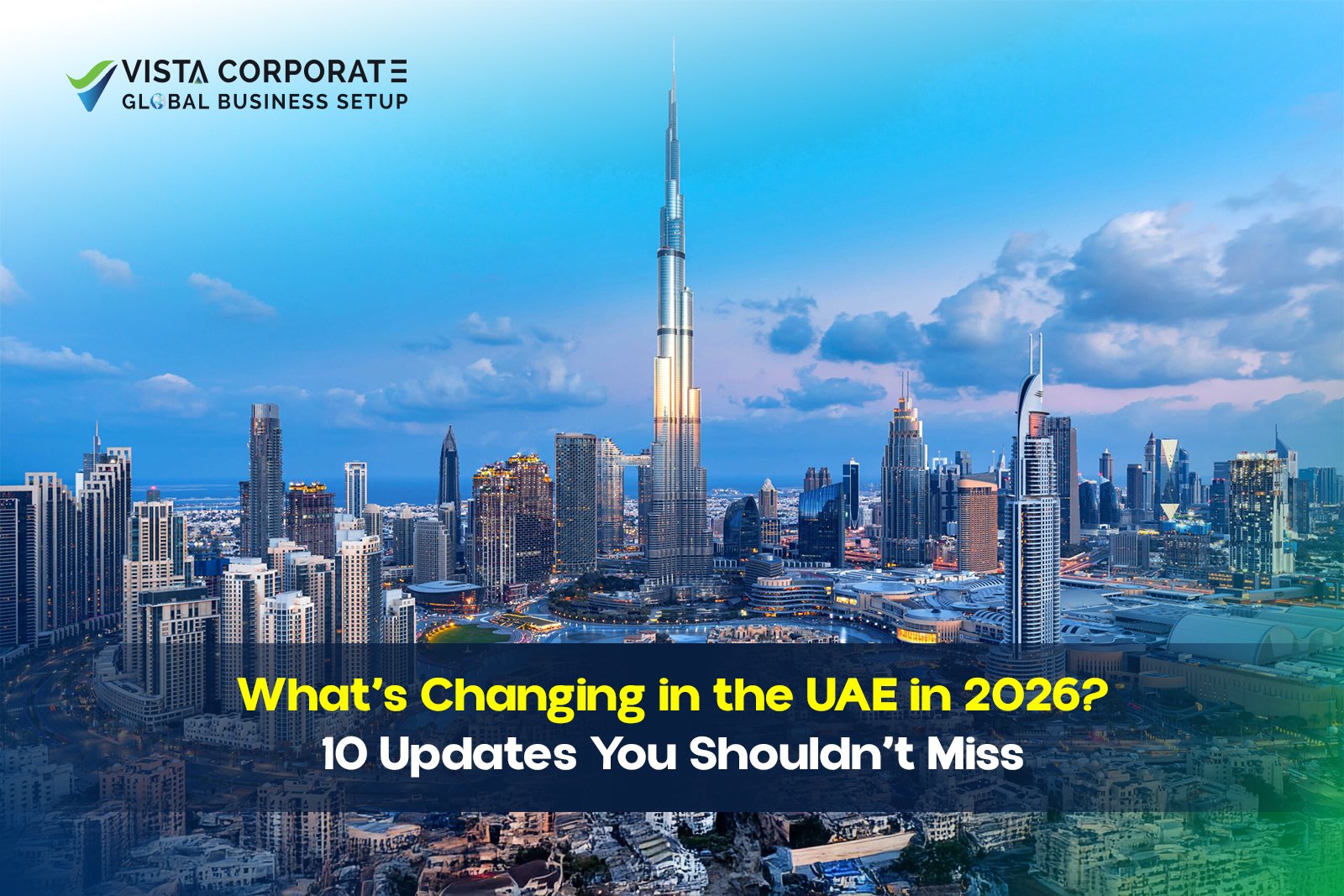
Are you ready for 2026 in the UAE?
Your daily life, your business, and the way you move around the city are about to change. New rules on taxes, plastic usage, school calendars, and transport will affect decisions you make every day.
This blog walks you through each major update, explains what it means for you, and shows how to prepare so nothing catches you off guard. By the time you finish reading, you will know exactly what changes require your attention and what steps you can take now.
1. A Healthier UAE: The New Sugar Tax System
Have you checked the sugar content in your favourite drinks lately? Starting in 2026, the UAE is changing the way beverage taxes work. Instead of taxing by category, taxes will now depend on the actual sugar content. That means a soda with high sugar could cost more, while lower-sugar options may become cheaper.
What does this mean for you? For consumers, it could change what they choose at the store or in a cafe. For businesses, menus, pricing, and inventory might need a rethink.
Brands that offer lower-sugar alternatives could gain an edge, while sugary options will need clear labelling and potentially higher prices.
This change is part of a wider public health push and aligns the UAE with broader GCC standards.
The goal is simple: reduce sugar consumption, improve health outcomes, and give people choices that actually benefit them. For businesses, planning ahead is key. Review your product offerings, check sugar levels, and make adjustments now so you aren’t caught off guard when the rules kick in.
2. Environmental Shift: Full Ban on Single‑Use Plastics
Do you use plastic bags, cutlery, or straws without thinking twice? That’s about to change.
From January 1, 2026, the UAE will enforce a full ban on single-use plastics, including bags, plates, cups, and straws. Businesses and consumers alike will need alternatives.
Why now? This move is a major step toward the UAE’s sustainability targets. The government wants to cut plastic waste, reduce environmental impact, and encourage reusable solutions.
For you, this could mean carrying your own bag or cup more often. For businesses, it’s time to rethink packaging, adopt eco-friendly alternatives, and communicate the change to customers proactively.
While it might seem inconvenient at first, these changes are manageable. Start preparing by switching to biodegradable or reusable options, adjusting procurement, and educating your team and customers. Early adoption can turn this challenge into a competitive advantage.
3. VAT Updates: Simpler Rules, Clearer Processes
Are you ready for VAT to get simpler in 2026? The UAE is updating its rules to make life easier for businesses and reduce unnecessary paperwork.
One major change is the removal of self-invoicing under the reverse charge mechanism. If you’ve been relying on that process for years, it’s time to rethink how your invoices are issued.
There’s also a five-year time limit for reclaiming any excess refundable tax after reconciliation.
If you have old claims sitting around, waiting won’t help. This is a good moment to review your past filings, ensure everything is in order, and make the necessary adjustments before the new rules take effect.
4. Tax Reforms: Transparency and Predictability
The broader tax reforms in 2026 are designed to make the system more predictable and transparent. The Federal Tax Authority will have expanded powers for audits and investigations, which might sound intimidating, but it actually means disputes are likely to get resolved faster.
Also Read: UAE Introduces New Tax Rules Effective January 2026: What Businesses Need to Know
For you as a business owner or investor, the focus should be on preparation. Review your processes, check that invoices and claims are properly documented, and consider digital tools to simplify tracking.
Staying ahead now prevents last-minute stress, reduces errors, and helps ensure smoother audits. Businesses that adapt early will find compliance less of a burden and their financial planning more reliable.
5. Mandatory E‑Invoicing for All Businesses
Are you ready for every invoice to go digital? Let’s be clear.
E-invoicing in the UAE is not just about sending a PDF by email. From 2026, invoices will need to follow a structured digital format and flow through approved systems so they can be verified and tracked in real time.
What does that mean for you? Your current accounting or ERP software may need an upgrade. Manual workarounds won’t hold up. Your finance team will need clarity on formats, timelines, and reporting requirements.
The upside is real, though. Cleaner records, fewer disputes, faster audits, and much better visibility over cash flow.
If you run multiple entities, issue high volumes of invoices, or deal with cross-border transactions, this becomes even more important. Starting early gives you time to test systems, train teams, and fix gaps without pressure. Leave it late, and something as basic as invoicing can slow your operations down.
6. Etihad Rail: Passenger Service Takes Off
Did you know that the Etihad Rail network currently only carries freight? That’s about to change in 2026. Passenger services are coming, and they’re set to make travel between the Emirates faster, greener, and far more convenient.
Once it opens, the network is expected to carry around 36.5 million passengers every year. The 900-kilometre route will connect 11 cities across all seven Emirates, from Al Sila in the west to Fujairah in the east, including stops in Ruwais, Al Mirfa, Sharjah, Al Dhaid, Abu Dhabi, and Dubai.
Imagine this: travelling from Abu Dhabi to Dubai or Dubai to Fujairah will take just 50 minutes. And with the high-speed rail project, that could drop to 30 minutes. For you, this changes how you think about commuting, meetings, or even weekend plans.
For businesses, it’s a game-changer. Offices don’t have to be stuck in one city to access talent or clients in another. Locations near stations suddenly become more valuable. Retail, logistics, hospitality, and service-based businesses all benefit from easier movement of people.
If your work or investments depend on mobility, this is one development you don’t want to ignore. Planning ahead now could give you a real edge once the passenger service goes live.
7. Flying Taxis and the Future of Urban Travel
Would you take a 10-minute flight across Dubai instead of sitting in traffic? By early 2026, that could be your reality. Dubai is rolling out electric flying taxis with four initial vertiports at Dubai International Airport, Downtown Dubai, Dubai Marina, and Palm Jumeirah. The aim is to connect key spots quickly and eventually make air taxis as common as taking a bus.
So how fast will this actually be? A trip from DXB to Palm Jumeirah will take about 10 minutes instead of 45 minutes in a car. Speeds can reach up to 320 km/h, and each vehicle carries a pilot plus four passengers. Boarding and disembarking take minutes, and you won’t have to go through airport-style security.
What about cost? Surprisingly, tickets are expected to be around the price of an Uber Black ride, making it accessible for regular use, not just a novelty. And since Uber is a global partner, you’ll be able to book rides straight from the app.
Safety and convenience have been top priorities. The taxis are electric, so they’re quiet and pollution-free. Each aircraft has six rotors for extra stability, and rigorous testing—including hot-weather trials and operational simulations—has been completed. Additionally, flights are planned at 1,000-3,000 feet, and your mobile signal should remain strong if you want to catch up on emails or even scroll through TikTok on the way.
8. Dubai Loop: Underground High-Speed Travel
Have you ever imagined skipping traffic and travelling across Dubai in minutes? By the second quarter of 2026, that could become a reality with the Dubai Loop. Developed by Elon Musk’s Boring Company, the Loop is an all-electric, high-speed underground transport system designed to move people directly to their destinations without stopping at every station. Think of it as Teslas in tunnels operating as a public transport network.
So how is this different from the metro? Instead of large stations and fixed stops, the Loop uses smaller, distributed stations that can fit into shopping centres, offices, or even residential areas. You board a Tesla, choose your destination, and go straight there. No waiting, no crowds, no unnecessary stops. Travel is faster, quieter, and less stressful than traditional subways.
The pilot phase will cover 17 kilometres with 11 stations, capable of moving over 20,000 passengers per hour. Vehicles can reach speeds up to 160 km/h, meaning trips between major hubs could take just a few minutes. The long-term vision is to expand across the city, eventually handling over 100,000 passengers per hour, transforming how people commute and how businesses think about accessibility.
For residents and commuters, this is about convenience and speed. For businesses and investors, it’s a huge opportunity. Locations near Loop stations could become more valuable, commercial hubs more accessible, and last-mile connections more efficient. If you’re planning operations, office locations, or investments in Dubai, keeping an eye on the Loop could give you an edge as the city embraces this futuristic mobility solution.
9. Major Events and Tech-Led Growth
Are you paying attention to where the next wave of business activity is headed? With large-scale events like GITEX expanding at Expo City, the UAE is doubling down on technology, innovation, and global collaboration.
For founders, consultants, and investors, this matters. These events are not just exhibitions. They drive company formations, cross-border partnerships, and sector-specific demand, especially in tech, advisory, fintech, and professional services. If you are considering setting up a business, restructuring an existing one, or entering the UAE market, timing around these events can make a real difference.
10. Infrastructure Upgrades and What They Unlock
When infrastructure improves, opportunity follows. Projects like the World Trade Centre roundabout upgrade are designed to reduce congestion and improve connectivity across key commercial zones.
For you, this can influence where clients gather, where offices make sense, and where property values may shift over time. Businesses that align their location and expansion plans with infrastructure upgrades often gain a long-term advantage. This is where informed planning beats reactive decisions.
What This Means for Businesses and Investors
So what’s the real takeaway for you?
The UAE is tightening systems, not to slow things down, but to make the market cleaner and more predictable. That’s good news if you’re building something serious. Clear tax rules, stricter sustainability policies, and better infrastructure create space for businesses that plan well and operate properly.
There are also new opportunities taking shape.
Health-focused products, sustainable packaging, digital invoicing solutions, logistics, mobility services, and advisory businesses are all seeing rising demand. At the same time, financial planning matters more than before. Pricing models, cash flow, tax exposure, and even where and how you set up your company can directly impact profitability under the new rules.
This is where many businesses hesitate. They know change is coming, but they’re unsure what to act on first. That’s exactly the gap Vista works in. We help you think through structure, licensing, compliance, and financial positioning early, so growth doesn’t get blocked later by avoidable issues.
Final Thoughts
2026 isn’t about reacting fast.
It’s about making informed moves at the right time.
If you’re already operating here, this is a good moment to step back and ask a simple question. Does your current setup still make sense for what’s coming next? If you’re thinking about entering the UAE or investing here, understanding these updates early can save you from costly adjustments later.
At Vista, we spend a lot of time helping founders and investors think through exactly these moments. Not just what the rules say, but what they actually mean for your plans.
Now over to you. Which of these 2026 updates do you think will impact you the most? And are you preparing for it yet, or waiting to see how it plays out?
If you’d like clarity on how these changes affect your business or investment plans, a conversation now can make the road ahead much easier.
Search
Recent Post
 24 Mar 2026
 18 Mar 2026