 19 Jun 2025
 By Vista Corp
There are cities that grow slowly, and then there is Dubai.
Dubai does not wait for opportunity to arrive. It builds the airport, free zones, ports, digital systems, investor policies, global events, luxury lifestyle, and business environment first. Then the opportunity has no choice but to land there.
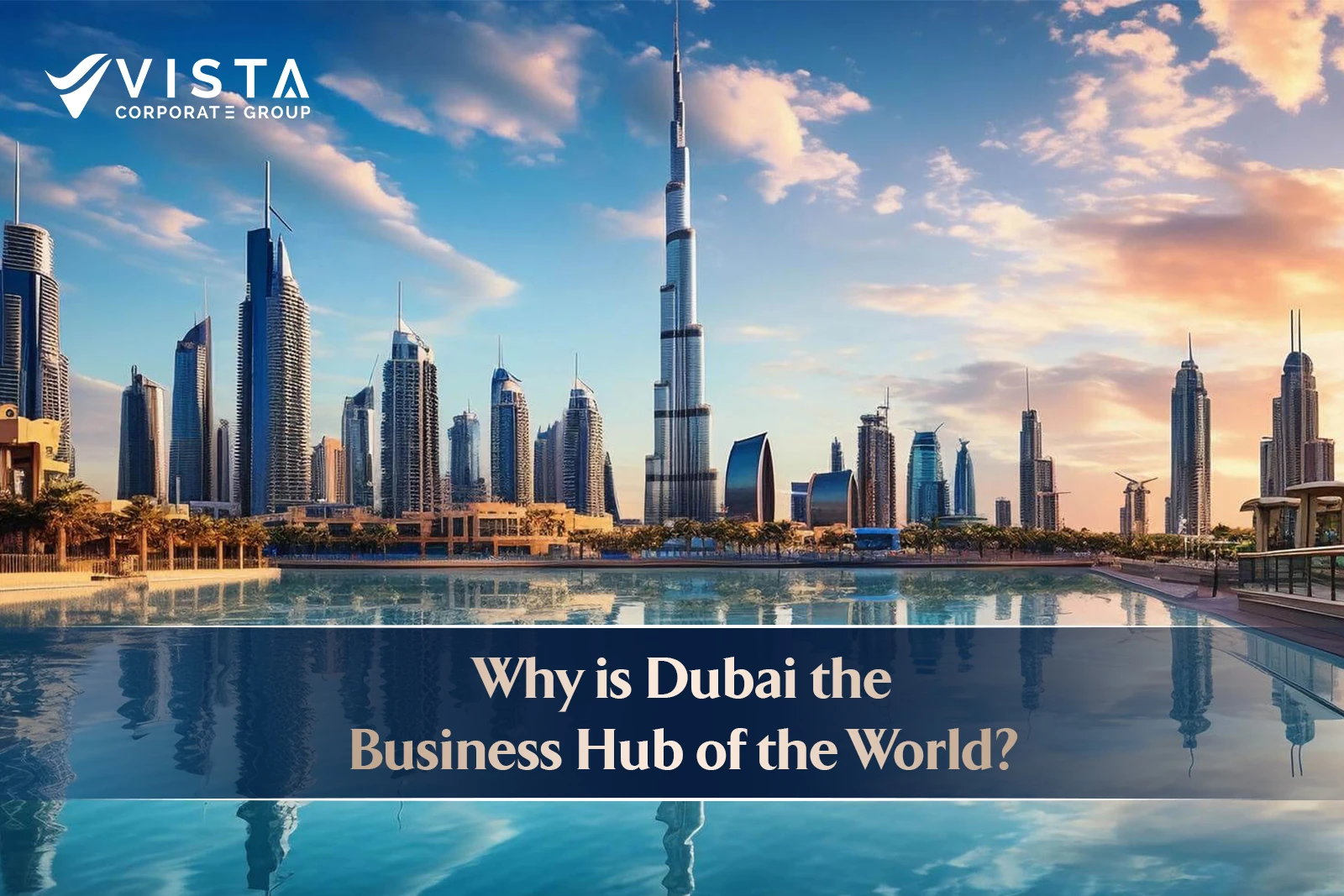
That is why the question is no longer “Is Dubai a good place for business?” The better question is, “Why is Dubai the business hub of the world, and why are global entrepreneurs still choosing it in 2026?”
Dubai has become much more than a glittering skyline or a tourist favourite. It is a serious global business destination built on strategy, speed, connectivity, investor confidence, and long-term vision. From startups and SMEs to multinational companies, family offices, real estate investors, fintech firms, consultants, traders, and digital entrepreneurs, Dubai has created an ecosystem where businesses can move faster, scale smarter, and connect with the world more easily.
The UAE economy remains strong, with real GDP growth at 5.6% in 2025 and broadly steady growth projected in 2026, mainly driven by non-hydrocarbon sectors such as financial services, insurance, manufacturing, and construction. This matters because Dubai’s rise is not built on one industry. It is built on a diversified, future-facing economy that continues to attract founders, investors, and global companies.
Dubai Is Built Like a Global Business Control Room
One of the biggest reasons Dubai became the world’s business hub is simple: its geography.
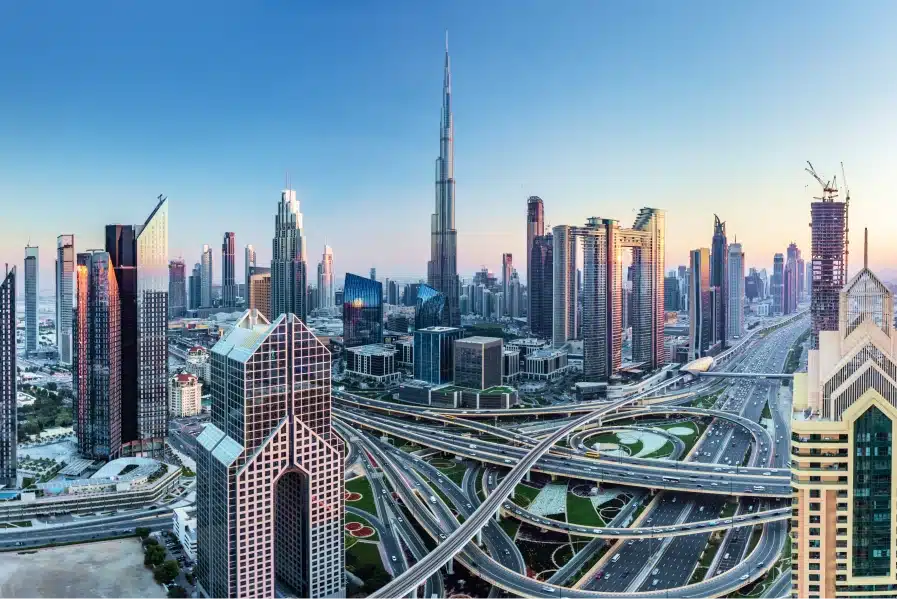
Dubai sits between East and West, connecting Asia, Europe, Africa, and the Middle East within a few hours of travel. For a business owner, that means easier access to suppliers, customers, investors, logistics partners, and regional markets. For international companies, Dubai works like a command centre where they can manage operations across multiple continents without being too far from any of them.
But geography alone does not create a business hub. Many cities are well-located. Dubai’s advantage is that it turned its location into infrastructure.
Dubai International Airport handled a record 95.2 million passengers in 2025 and remained the world’s busiest airport for international travel, supported by 108 airlines connecting 291 cities across 110 countries. This gives Dubai a major advantage for business travel, tourism, exhibitions, logistics, corporate meetings, investor visits, and international hiring.
In simple terms, Dubai is easy to reach. And in business, accessibility is power.
Dubai Attracts Companies Because It Makes Business Practical
A global business hub is not created by tall buildings. It is created by systems that help companies operate smoothly.
Dubai has spent years streamlining business setup, licensing, banking support, visa access, office solutions, and government services to make them more structured and investor-friendly. Entrepreneurs can choose between mainland, free zone, and offshore structures depending on their business activity, ownership needs, expansion plans, and target market.
This flexibility is one of Dubai’s strongest advantages. A consultant, trader, tech startup, real estate investor, e-commerce brand, logistics company, or professional service firm does not need to follow a one-size-fits-all model. Dubai offers multiple routes to enter the market, build legally, hire talent, and scale.
That is exactly why business setup in Dubai has become so attractive for international investors. The city understands that different businesses need different structures. Some companies need access to the UAE mainland market. Some need a free zone setup with sector-specific benefits. Some need regional holding structures. Some need international trading flexibility.
Dubai gives them options.
Investor Confidence Is Not Just a Claim. The Numbers Show It.
Dubai’s business appeal is visible in its company formation numbers.
Dubai Chamber of Commerce announced that 2,709 new member companies joined in March 2026 alone, showing continued investor interest even during changing market conditions. Earlier, more than 53,000 new companies joined the Dubai Chamber of Commerce during the first nine months of 2025, while members’ exports and re-exports rose 16% to reach AED 260 billion.
That is not just growth. That is confidence at scale.
When thousands of companies continue to register, operate, export, re-export, and expand from one city, it tells the world something important: Dubai is not only attractive from the outside; it works from the inside.
Entrepreneurs come to Dubai because they see opportunity. They stay because the ecosystem supports growth.
Dubai Is a Magnet for Foreign Direct Investment
Another major reason Dubai is called a global business hub is its ability to attract foreign investment.
Dubai was ranked the world’s No. 1 destination for Greenfield Foreign Direct Investment projects for the fourth consecutive year, according to Financial Times Ltd.’s fDi Markets data reported in 2025. This ranking matters because Greenfield FDI reflects new projects, new operations, new jobs, and long-term investor confidence.
It means businesses are not just putting money into Dubai on paper. They are physically creating operations, offices, facilities, teams, and regional headquarters.
For entrepreneurs, this creates a powerful ripple effect. More foreign investment brings more service providers, more clients, more networking opportunities, greater access to funding, and more global competition. The city becomes a marketplace of ambition.
And Dubai thrives on ambition.
DIFC Has Made Dubai a Serious Financial Powerhouse
Dubai’s rise as a business hub is also closely tied to its strength in finance.
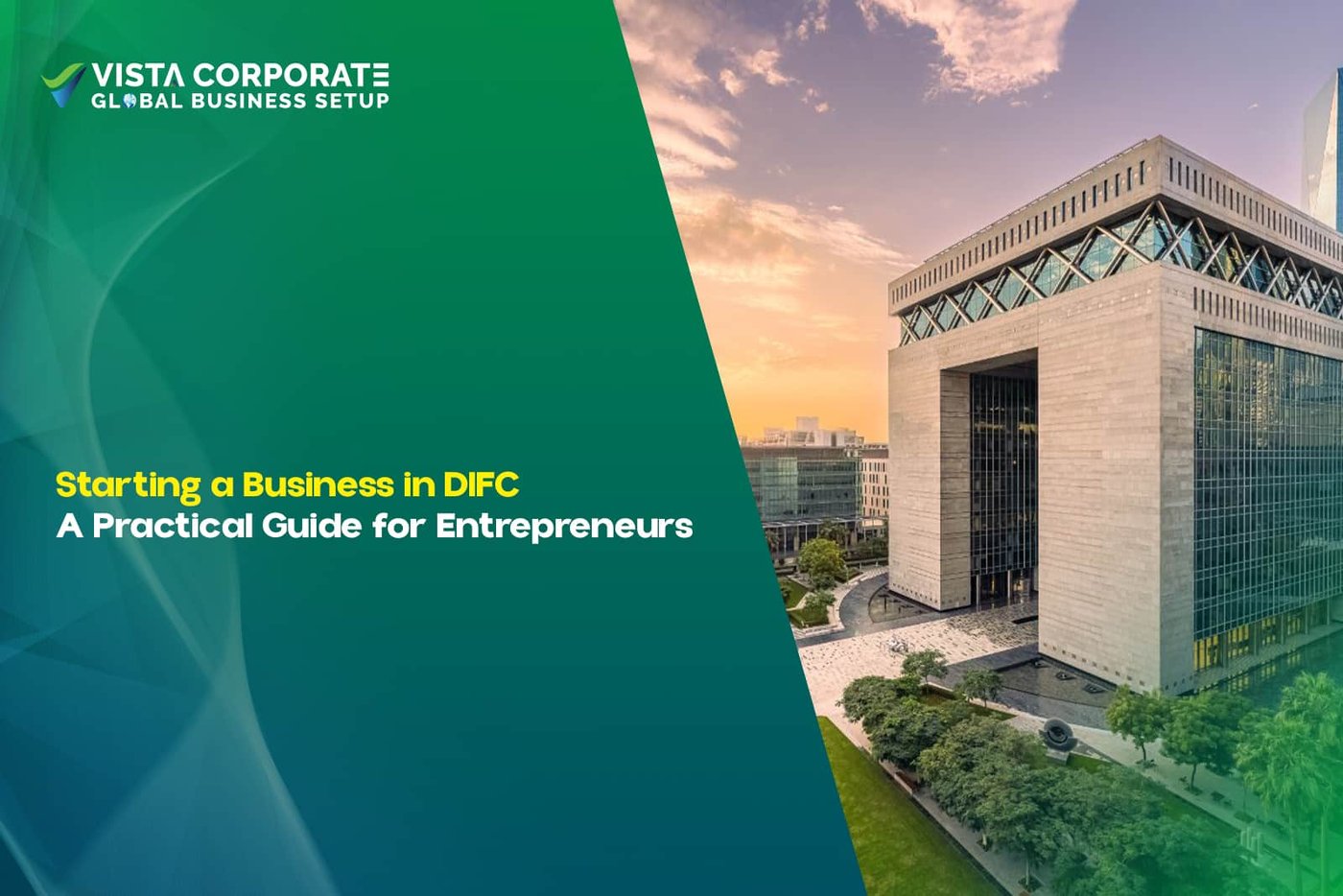
The Dubai International Financial Centre, better known as DIFC, continues to attract banks, wealth management firms, fintech companies, family offices, investment funds, and global financial institutions. In 2025, DIFC recorded 28% year-on-year growth in the number of active companies, reaching 8,844. It also added 2,525 new active company registrations, a 39% increase from the previous year.
This is important because global business follows capital.
When financial firms, investors, family offices, and fintech innovators gather in one place, businesses gain better access to funding, advisory services, investment networks, banking connections, and cross-border financial expertise.
Dubai is no longer just a place where people start trading companies. It is a place where global capital moves, decisions are made, and wealth is managed.
Dubai’s Economy Is Diversified, Not Dependent on One Sector
One of the biggest misconceptions about Dubai is that its economy depends only on oil. That may have been a common assumption years ago, but it is no longer accurate.
The UAE’s non-oil economy has become a major growth driver. In the first nine months of 2025, the UAE’s GDP grew 5.1% year-on-year, while non-oil GDP grew 6.1%, reaching approximately AED 1.4 trillion in total GDP. The Ministry of Economy also reported that in Q1 2025, non-oil GDP grew by 5.3% to AED 352 billion.
For Dubai, this diversification is a major reason behind its business strength. The city has strong activity across tourism, logistics, finance, real estate, technology, trade, consulting, hospitality, education, healthcare, digital services, and professional services.
A diversified economy provides business owners with greater stability. If one sector slows down, other sectors continue to create opportunities. This is why Dubai feels less like a seasonal market and more like a long-term business platform.
The D33 Agenda Gives Dubai a Clear Roadmap
Dubai is not growing randomly. It has a plan.
The Dubai Economic Agenda D33 aims to double Dubai’s economy over the next decade and position the city among the top three global cities to live, work, and invest in. The agenda includes major goals around global trade, foreign investment, digital transformation, innovation, entrepreneurship, and economic competitiveness.
This matters because investors like clarity.
When a city publicly commits to long-term economic growth, infrastructure expansion, global competitiveness, and investor attraction, businesses feel more confident planning for the future. Dubai does not simply say it wants to be a global business hub. It creates policies, platforms, and targets to make that happen.
For business owners, this is powerful. You are not entering a market that is standing still. You are entering a city that is actively designing its next decade.
Free Zones Make Dubai Attractive for Global Entrepreneurs
Dubai’s free zones are one of the strongest reasons entrepreneurs choose the city.
Free zones offer sector-focused business environments for industries such as media, technology, commodities, finance, logistics, healthcare, design, trade, education, and professional services. They help businesses operate within specialised communities where licensing, office solutions, networking, and regulatory structures are designed around specific industries.
For global investors, this reduces confusion. Instead of trying to fit every company into a single structure, Dubai allows businesses to choose a jurisdiction that best matches their activities and growth plans.
The UAE also offers a corporate tax framework where Qualifying Free Zone Persons may benefit from a 0% Corporate Tax rate on qualifying income, subject to meeting the required conditions. This provides free-zone businesses with a structured tax environment, but it also makes compliance important. Companies must understand their obligations properly instead of assuming benefits apply automatically.
This is where professional business setup guidance becomes essential. Choosing the right license, jurisdiction, activity, tax position, visa allocation, and compliance structure can shape the company’s future.
Dubai Makes Global Trade Easier
Dubai has always been a trading city at heart.
Before the skyscrapers, luxury hotels, and global events, Dubai was known for trade. That DNA still exists. Today, it has become much bigger and more sophisticated.
Dubai connects global supply chains through ports, airports, free zones, customs systems, logistics corridors, and re-export networks. This makes it especially attractive for import-export businesses, e-commerce brands, wholesalers, distributors, manufacturers, and regional trading companies.
The fact that Dubai Chamber members’ exports and re-exports reached AED 260 billion in the first nine months of 2025 shows how deeply trade is embedded in the city’s business ecosystem.
For companies that want access to the Middle East, Africa, South Asia, Europe, and beyond, Dubai is not just a location. It is a launchpad.
Dubai Offers a Strong Lifestyle Advantage for Business Owners
People do not build businesses in isolation. They build them in places where they can also live well.
Dubai understands this better than most cities. It offers safety, world-class healthcare, international schools, luxury housing, clean infrastructure, global restaurants, high-end retail, beaches, entertainment, cultural diversity, and a strong professional community.
This lifestyle advantage helps Dubai attract founders, executives, investors, skilled professionals, and their families.
For companies, that matters. Talent is easier to attract when people actually want to live in the city. Investors are easier to convince when the city offers both business opportunities and quality of life. Entrepreneurs are more likely to stay when they can build a company and a life in the same place.
Dubai is not only selling business licenses. It is a selling possibility.
Dubai Is Fast, and Speed Matters in Business
One of Dubai’s greatest strengths is speed.
The city moves quickly with infrastructure, reforms, digital services, investor initiatives, and business-friendly systems. This speed creates a different kind of energy. Entrepreneurs feel that things can happen faster. Meetings can turn into partnerships. Ideas can turn into licenses. Licenses can turn into operations. Operations can turn into regional expansion.
In many parts of the world, business owners lose months navigating delays, unclear processes, slow approvals, and outdated systems. Dubai has worked hard to reduce that friction.
That does not mean every process is instant or effortless. Businesses still need proper documentation, approvals, compliance, banking readiness, visa planning, and regulatory understanding. But compared with many global markets, Dubai’s business environment is designed to help companies maintain momentum.
And for entrepreneurs, momentum is everything.
Dubai Welcomes Both Startups and Multinational Companies
Another reason Dubai has become the world’s business hub is that it does not focus on a single category of investor.
It welcomes the solo consultant launching a service company. It welcomes the family business opening a regional branch. It welcomes the startup founder building a digital product. It welcomes the multinational company setting up a Middle East headquarters. It welcomes investors seeking asset protection and expansion. It welcomes the trader, consultant, real estate entrepreneur, logistics operator, and fintech innovator.
Dubai International Chamber attracted 64 multinational companies to Dubai in 2025, achieving annual growth of 25.5%. This shows that Dubai is not just popular among small business owners; it is also trusted by major global companies looking for regional expansion.
That balance is rare. Many cities are either startup-friendly or corporate-heavy. Dubai manages to be both.
Dubai’s Business Ecosystem Is Built on Networking
Dubai is also a relationship-driven business city.
Networking events, investor meetups, industry conferences, exhibitions, business councils, chambers, founder communities, and professional groups are part of the city’s commercial culture. In Dubai, conversations often become collaborations. A coffee meeting can lead to a referral. A business event can lead to a client. A community can become a growth channel.
This is especially helpful for new entrepreneurs. Entering a new market can feel intimidating, but Dubai’s ecosystem makes it easier to meet people, understand opportunities, and build credibility.
The city rewards visibility. If you show up consistently, communicate clearly, and offer real value, Dubai gives you room to grow.
Dubai Is Business-Friendly, but Compliance Is Becoming More Important
Dubai is attractive, but it is also becoming more regulated and structured. That is a good thing.
As the UAE grows into a global business hub, compliance standards for corporate tax, VAT, accounting, AML, ESR, UBO, licensing, banking, and documentation are becoming increasingly important. This helps protect the market, improve transparency, and build international credibility.
For business owners, this means setting up a company is not just about getting a license. It is about getting the structure right from day one.
A business should understand:
- Which jurisdiction suits its activity
- Whether the mainland or the free zone is better
- What documents are required
- What visa options are available
- How banking should be planned
- What tax and accounting obligations apply
- Whether special approvals are needed
- What compliance records must be maintained
Dubai offers incredible opportunities, but the smartest businesses enter with clarity.
Why Entrepreneurs Choose Dubai Again and Again
So why is Dubai the world’s business hub?
Because it gives entrepreneurs what every business owner secretly wants: access, speed, structure, credibility, opportunity, and ambition in one place.
Dubai connects markets. It attracts capital. It supports trade. It welcomes talent. It builds infrastructure before demand peaks. It creates free zones for specialised industries. It offers lifestyle benefits that make relocation easier. It has a long-term economic agenda. It continues to attract new companies, multinational brands, investors, and global professionals.
Most importantly, Dubai has built a business environment where growth feels possible.
That is the real magic of Dubai. Not just the skyline. Not just the luxury. Not just the tax environment. Not just the airport. It is the belief that if you are serious about building something, Dubai gives you a place to begin, expand, and be seen.
Dubai did not become a global business hub by accident. It became one through planning, investment, policy, infrastructure, and relentless execution.
For entrepreneurs, investors, and companies looking at 2026 and beyond, Dubai remains one of the strongest places in the world to start, scale, and expand a business. Whether you are launching your first company, moving an existing business, entering the UAE market, or building a regional headquarters, Dubai offers an ecosystem designed for action.
The opportunity is real. The competition is real, too. That is why the right setup, structure, and guidance matter.
Vista Global Business Setup helps investors and entrepreneurs start their business journey in Dubai with the right structure, licensing support, and end-to-end company formation guidance.
Search
Recent Post


 2 Oct 2026